


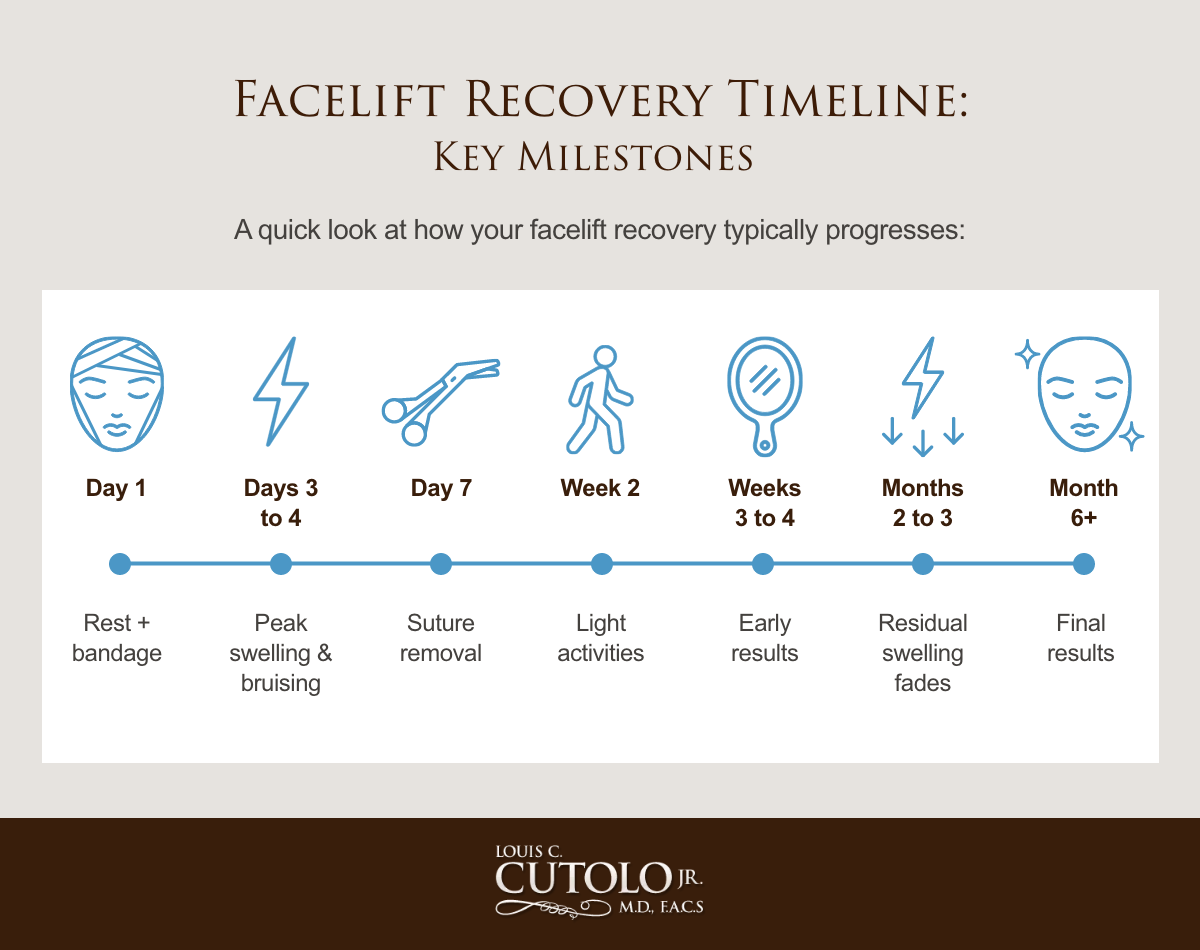
Facelift recovery typically progresses from swelling and bruising in the first few days to early results by week three, with full healing continuing for several months. Your experience will vary depending on whether you choose a traditional facelift, a SMAS or deep plane technique, or my exclusive Rejuvelift™ (Mini Lift). Understanding the day‑by‑day facelift recovery milestones can help you feel more prepared and confident.
What Can You Expect in the First 24 Hours?
Most patients spend the first 24 hours resting with their head elevated as initial swelling and facial tightness begin. You’ll have bandages in place, and it’s normal to feel groggy or tired as your body begins the healing process.
Traditional facelift patients usually feel more pressure or tightness because deeper tissues are lifted, while Rejuvelift patients often feel more alert since general anesthesia isn’t used.
What Happens in Days 2 to 7?
Swelling and bruising typically peak around days 3 to 4 and then gradually begin improving.
During this stage, you’ll experience several typical healing milestones:
- Bruising that spreads downward before it begins to fade
- Tenderness or numbness around your incision lines
- Frequent short walks to support healthy circulation
- Follow‑up appointments, including suture removal around day 7
As the first week ends, many Rejuvelift patients feel ready to resume light activities sooner than those who had a traditional or deep plane procedure.
What Is Recovery Like in Week 2?
By the second week, most people feel noticeably more comfortable as bruising fades and tightness begins to ease. You can typically start wearing makeup again, return to light errands, and feel more socially comfortable.
Traditional facelift patients may still have visible swelling, while Rejuvelift patients are often well into their return‑to‑routine phase.
When Will You Feel More Like Yourself? (Weeks 3 to 4)
Most people feel much more like themselves by weeks 3 to 4 as swelling subsides and early results become more visible.
During this phase, you may notice:
- A more defined jawline emerging
- Less facial fullness and better contour
- Continued incision healing with fading redness
- A return to regular routines and light exercise as advised
This stage often marks the point at which confidence rises and you can enjoy seeing your refreshed appearance take shape.
How Does Recovery Progress After the First Month?
Swelling continues to fade over the next 2 to 3 months, revealing your long‑term facelift results. Sensation gradually returns, scars begin to lighten and flatten, and you can resume all normal activities, including strenuous exercise and social events.
Does Recovery Look Different for Different Facelift Techniques?
Yes, facelift recovery varies depending on whether you choose a traditional facelift, a SMAS or deep plane approach, or my Rejuvelift procedure.
Here’s how downtime commonly differs among the techniques I offer:
- Traditional, SMAS, and deep-plane facelift techniques: These approaches involve lifting and repositioning deeper facial layers, which means recovery typically includes more swelling and a longer overall healing period.
- Rejuvelift: My signature approach offers shorter recovery and minimal downtime, with most patients back to work in 7 to 10 days
During your consultation, I help you choose the technique that best fits your anatomy and lifestyle, so you know exactly what to expect.
Learn more about the differences between Rejuvelift and a traditional facelift.


What’s Next?
Whether you choose a traditional facelift or my Rejuvelift technique, you’ll receive detailed instructions and ongoing support so you always feel informed, supported, and confident about what comes next.
To begin your transformation, call our office today at (718) 720-9400 or request a consultation using the online form.
Leave a Reply