A facelift (rhytidectomy) is a facial plastic surgery procedure that restores a more youthful facial appearance by lifting and repositioning deeper facial tissues and tightening lax skin. Board-certified plastic surgeon Dr. Louis Cutolo performs both deep plane facelifts and his signature Rejuvelift™ mini facelift in Staten Island to deliver long-lasting, natural-looking results tailored to each patient from Brooklyn, Queens, Holmdel, and other New York communities .
What Is a Facelift?
A facelift is a cosmetic surgery used to reduce common signs of aging on the face and neck. The procedure tightens loose skin and lifts drooping facial muscles, helping you look like a younger version of yourself. At our practice, we offer different facelift techniques so you can customize the procedure to your needs.
What Does a Facelift Cost in Staten Island?
The cost of a facelift in the Staten Island and Brooklyn area depends on several factors, including the extent of the procedure, the experience and training of the plastic surgeon, and the geographic area where the practice is located. Rejuvelift, developed by Dr. Cutolo, generally costs less than a traditional facelift because it’s performed using local anesthesia instead of general anesthesia. The procedure itself is also shorter.
Cost is a factor for most patients, of course, but it’s more important to choose a qualified, board-certified plastic surgeon than to opt for the lowest cost for a procedure.
Who Is a Good Candidate for a Facelift?
You may benefit from a facelift if you want to:
Tighten sagging skin and reduce excess fat on your face and neck
Improve creases around your mouth and nose
Restore a firm, defined jawline
Dr. Cutolo thoroughly examines your skin tone and laxity during the consultation to determine if a facelift is the best approach to meet your aesthetic goals. Patients with mild to moderate laxity of the lower face may benefit from FaceTite, a minimally invasive facelift alternative.
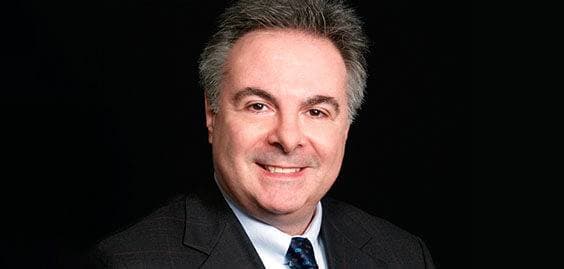
A board-certified plastic surgeon in Staten Island, Dr. Louis Cutolo, Jr. is an active member of both the American Society of Plastic Surgeons and The American Society for Aesthetic Plastic Surgery and a Fellow of the... read on
Dr. Cutolo offers both deep plane facelifts and his innovative, low-downtime mini facelift procedure called the Rejuvelift at his New York practice. Regardless of the technique, he will customize your facelift so that it achieves your unique goals.
Deep Plane Facelift
Performed under general anesthesia, modern facelift techniques focus on repositioning the deeper structures of the face—not just tightening the skin. Deep plane and SMAS facelifts address the SMAS (superficial musculoaponeurotic system), a foundational layer of tissue that supports the facial contours. By carefully lifting and repositioning this layer, Dr. Cutolo is able to restore a more youthful structure to the face while maintaining natural movement and expression.
Incisions are typically placed discreetly within the hairline and around the ears. Rather than simply pulling the skin tight, Dr. Cutolo elevates the underlying tissue and muscle layer, then re-drapes the skin smoothly over the new contours. This approach reduces tension on the skin, helping results appear more natural and avoiding a stretched look. Excess skin is trimmed, and fine sutures are used to close the incisions with careful attention to minimizing visible scarring. The procedure generally takes several hours, depending on the extent of correction to the face and neck.
Rejuvelift™ (Mini Facelift)
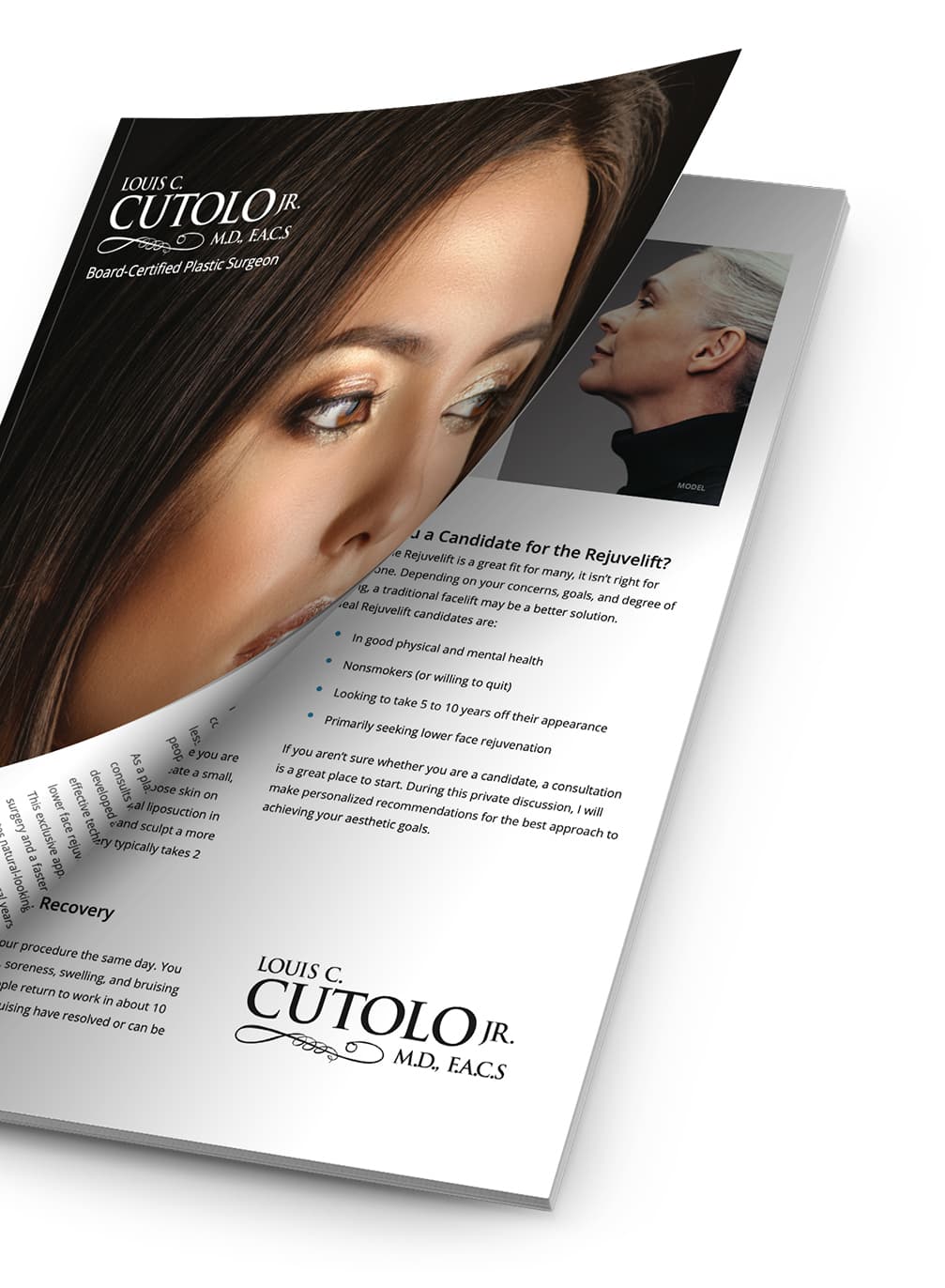
The Rejuvelift is an office procedure that focuses on the lower third of your face. Dr. Cutolo performs this procedure using local anesthesia with oral sedation to keep you comfortable. He removes excess skin and fat deposits to correct concerns such as sagging jowls, skin wrinkling, and other signs of aging. The jawline is tightened as well during the 1½ to 2-hour surgery. Fat injections can be done with this procedure as well in order to improve creases from the nose to the mouth and sunken hollowed cheeks. Dr. Cutolo will discuss these options with you during your consultation.
A Reputation Built on Results
I found Dr. Cutolo to be honest, knowledgeable and compassionate. You will never feel rushed during...
Extremely knowledgeable, experienced and honest esthetician Lynn that personalizes treatments according...
I have nothing but great things to say about D Cutolo and his staff. From the consultation, to my procedure...
LOVE Dr Cutolo and his office. I’ve seen him and Lynn for a spa above for over 15 years now. Always...
The recovery following a facelift varies from patient to patient. Following the postoperative instructions provided by Dr. Cutolo helps minimize your discomfort, expedites the healing process, and greatly reduces the risk of complications. Make sure you have a support system of friends and loved ones in place before the procedure, because you will need help around the house in the early days of your recovery.
The specific nature of your recovery will depend in part on the technique used by Dr. Cutolo for your procedure.
Rejuvelift: You’ll need to rest and limit your movements to help the healing process. Much of the recovery is similar to that experienced by facelift patients but typically takes less time. Many patients can return to work and resume normal activities about a week to 10 days after the procedure.
Deep plane facelift: Dr. Cutolo bandages your face immediately after surgery to support healing and reduce swelling. Because a deep plane facelift addresses the underlying SMAS layer rather than placing tension on the skin alone, recovery often involves a more structured healing process with a focus on allowing the deeper tissues to settle into their new position. He recommends resting and limiting your movements early on, while incorporating light activity to promote healthy circulation. Read on to learn a few milestones you might expect during recovery from a deep plane facelift.
Facelift Recovery Timeline
First Two Weeks
Expect swelling and bruising to peak about 3 to 4 days after surgery.
Manage pain with any prescribed medication for most of the first week.
The incision site may be tender, and you may feel some tingling, numbness, or tightness.
Soft, light, cool compresses help ease some of the swelling.
Walk around the house for a few minutes every few hours.
Sleep with your head elevated. Propping up your upper body with pillows or sleeping in a recliner can help.
You can usually resume driving once you stop taking prescription pain medication.
Your stitches will be removed at your follow-up appointment about a week following surgery.
Week Three
Pain should be more manageable at this stage.
Swelling will start to subside somewhat.
You can start wearing makeup.
Resume light activities such as walking around your neighborhood.
Week Four
You’ll likely return to a more normal routine.
Swelling will continue to subside, and bruising should be dissipating.
Your incision is healing, although it may still look pink or red.
Week Six
If you get your hair colored, you can resume now. Remain cautious while using hot hair styling tools—the feeling in your face can still be impaired, so you may not feel it if you burn yourself.
Swelling will continue to diminish.
Three Months
Although most swelling should be gone, slight swelling is possible for up to six months after surgery.
Your results will be more evident.
Scars should be lightening somewhat.
Facial sensation should be returning to normal.
You can resume all regular activities.
Six Months to One Year
Your scars will continue to fade.
All swelling should be fully resolved.
Enjoy your final results!
Facelift Results and Benefits
Imagine looking in the mirror – and seeing your face restored to its youthful beauty. That is how many of Dr. Cutolo’s patients describe their pleasure with their revitalized facial skin. In addition, both men and women often say that they feel more confident professionally and personally. They look as young as they feel! During your consultation, you can even preview your results with our state-of-the-art VECTRA® 3D imaging system. With VECTRA, you and Dr. Cutolo can work side-by-side to develop your ideal results and work toward them as a team.
How To Maintain Your Facelift Results
While facelifts provide long-lasting rejuvenation, your daily habits play a key role in preserving your results. Here are some tips to help you maintain your results:
Follow post-surgical instructions carefully to support proper healing
Protect your skin from the sun with SPF 30+ and consistent use
Avoid smoking, which accelerates skin aging and affects skin quality
Maintain a stable weight and healthy lifestyle
While a facelift cannot stop the aging process, it can improve your appearance for life. For example, if you have a facelift at 50, you will still look younger at 60 than you would have if you hadn’t had one.
Can I Combine My Facelift Surgery With Other Procedures?
Yes. Dr. Cutolo frequently combines facelift surgery with another procedures, which often include:
Eyelid surgery to tighten sagging upper eyelids, reduce puffy undereye bags, and remove fat pockets from the inner corners of the eyes.
Brow lift to elevate a heavy brow area and smooth out forehead creases.
Facial fat transfer to restore volume around the eyes, at the temples, smile lines around the mouth, and other areas.
He has performed these combined procedures for many patients, achieving a more complete aesthetic enhancement.
What Is a Nonsurgical (Liquid) Facelift?
A nonsurgical facelift or “liquid facelift” is an alternative to facelift surgery that rejuvenates the face by combining the following liquid injectables:
BOTOX® Cosmetic to reduce frown lines, crow’s feet, fine lines, and wrinkles.
Dermal fillers, such as Restylane®, JUVÉDERM®, and RADIESSE®, to replace facial volume and smooth out facial folds.
Results, while temporary, can provide remarkable enhancement for early to moderate signs of aging, but a facelift produces a more comprehensive, longer-term solution.
Dr. Cutolo also offers nonsurgical neck lift treatments for patients from Brooklyn and surrounding areas. This typically involves laser skin tightening or Fractora™, a radiofrequency-based treatment that gently heats the superficial and deeper layers of skin to stimulate collagen development.
FaceTite vs. Facelift
While facelift surgery is the gold standard for facial rejuvenation, FaceTite offers a less invasive alternative that can benefit women and men with early signs of aging. FaceTite is a skin-tightening and fat-reduction treatment that uses radiofrequency technology. Because it’s less invasive, the recovery time is shorter than after a facelift.
Schedule Your Facelift Consultation
Take the first step toward a smoother, more youthful appearance that reflects your vibrant personality. Patients from Brooklyn, Queens, and Holmdel visit our Staten Island practice to work with Dr. Cutolo. Request a consultation online or call us today at
(718) 720-9400 to schedule your visit.
Facelift FAQ
How long do facelift results last and how can I maintain them?
Facelift results typically last many years, but surgery cannot stop the natural aging process. You can help maintain your results by following your post-operative instructions, using sunscreen consistently, avoiding smoking, and maintaining a healthy lifestyle. Nonsurgical treatments treatments like BOTOX and dermal fillers can also help maintain facelift results.
Is a facelift worth it compared to fillers or nonsurgical treatments?
If you have moderate to advanced facial aging, a facelift can address your concerns for many years to come. Injectables and other nonsurgical treatments are best for early to mild aging and must be repeated to continue their improvements.
Is facelift surgery painful?
Like any surgery, a facelift comes with some discomfort. Tightness, swelling, or bruising are normal. Dr. Cutolo will prescribe pain medication to help you feel as comfortable as possible while recovering.
What is the best age to get a facelift?
While there is no “best age” for a facelift, most people wait until they notice significant sagging in their lower faces before pursuing one. This usually occurs when people are in their late 50s to 60s. Many men and women, however, are beginning to act earlier, choosing to have a Rejuvelift or mini facelift to address early skin laxity in the lower face and upper neck.
What if I’m mostly concerned about my neck and jawline?
Dr. Cutolo will use his proprietary Rejuvelift™ procedure to create a defined jawline and firm, youthful neck contour.
Are facelifts safe?
Like any surgery, a facelift carries some risks, including infection. The best way to keep your risk low is to work with a board-certified plastic surgeon who operates in a fully accredited hospital or surgery center.
What is the best alternative to a facelift?
A mini facelift may be the most effective alternative to a full facelift for the right patients. Several nonsurgical treatments are dubbed facelift alternatives, but none can produce the transformative outcomes that you’ll see after a surgical facelift.
Facelift recovery typically progresses from swelling and bruising in the first few days to early results by week three, with full healing continuing for several months. Your experience will vary depending on whether you choose a tradit… Read More
If you're considering a facelift, you might wonder about the cost and why prices vary so much between practices. Understanding the factors behind facelift pricing helps patients make confident, informed choices about their care. It als… Read More
Patients today have more options than ever for facial rejuvenation, from advanced nonsurgical treatments to time-tested surgical procedures like the facelift. While a facelift delivers dramatic, long-lasting improvements, many patients… Read More